By Dec Group
Subscribe to Supplier
Subscribe to Supplier
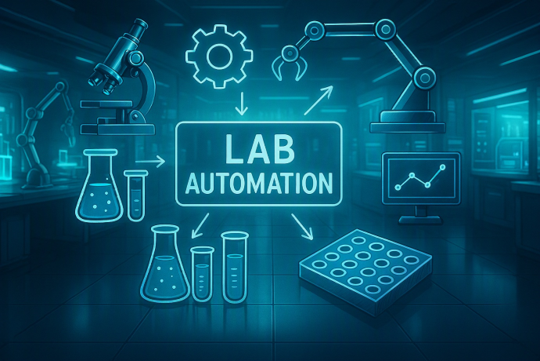
Precision dosing for self-driving labs – Dec microdosing and microsampling technologies
Pharmaceuticals and materials science are among the leading fields in which the integration of automation and artificial intelligence (AI) is transforming research.
Among the most innovative advancements in this domain is the self-driving lab concept: automated research facilities designed to streamline drug discovery processes, making them faster, more efficient, and cost-effective.
Dec Group is accelerating progress in this area through innovative precision dispensing technologies that support automated microdosing and sub-milligram sampling within self-driving laboratory environments.
Automating drug discovery
Self-driving labs in drug discovery harness cutting-edge automation technologies to conduct experiments with minimal human intervention. These labs utilize robotic systems to handle samples and automated material handling systems to manage workflows, enabling researchers to synthesize compounds and test their efficacy at an unprecedented pace.
By automating these labor-intensive tasks, self-driving labs significantly reduce the time and costs associated with bringing new therapies to market, allowing for a more agile response to public health needs.
The challenge of dosing solids at sub-milligram scale
One of the key challenges in pharmaceutical research is the precise sampling of solid materials, particularly at the sub-milligram level. While dispensing small quantities of liquids may seem straightforward, accurately dosing solid compounds presents a host of difficulties such as dosing accuracy, powder flow behavior, and electrostatic effects.
Current solutions rely either on manual handling or automated systems such as gravimetric dosing units. More recent approaches involve robotic arms capable of manipulating solids at the milligram scale, offering greater flexibility. However, existing technologies still face key limitations, including low throughput, limited versatility across material types, and potential failures due to physicochemical incompatibilities.
This is where advanced dosing and sampling technologies come into play.
Advanced dosing technologies
Dec Group’s commitment to developing sophisticated solutions for both liquids and powders is driven by the importance of precision in drug formulation and testing.
μPTS – rapid powder microdosing
The Dec μPTS microdosing system facilitates the precise and rapid dosing of extremely small quantities of powder (less than 1 mg) within seconds.
The technology operates by filling a calibrated chamber using a vacuum effect and dispensing the powder through a piston mechanism. A distinguishing feature of this system is its lack of a filter, enabling it to efficiently manage very fine or sticky materials. Additionally, a specially designed hopper accommodates a diverse range of challenging powders, enhancing its versatility. The system also offers automatically adjustable volume settings, making it adaptable to different dosing requirements.
This innovative system achieves remarkable accuracy, with a relative standard deviation (RSD) of up to 2%, irrespective of fluctuations in bulk density. Unlike traditional mechanical equipment such as the auger system, PTS-based devices maintain superior accuracy across a wider range of quantities, thanks to their reduced sensitivity to varying powder properties.
BoMa – rapid liquid microdosing
For ultra-precise liquid dosing, BoMa Technology also combines pressure and vacuum to achieve not just precision but also speed and convenience. It enables rapid dosing of components within seconds, significantly enhancing production efficiency.
Versatile and adaptable BoMa systems offer distinct advantages over conventional piston pumps, such as maintenance-free operation, thanks to the absence of seals, which also simplifies cleaning during product changes.
Process control and product integrity
This patented technology offers full in-process control (IPC) and ensures exceptional accuracy even for very small doses in isolator environments where traditional weighing systems struggle. Without shear forces, it preserves product integrity, making it particularly well-suited for fragile suspensions, large molecules, and biologics.
The BoMa concept avoids dead volume recirculation, enabling it to meet ultra-precise specifications even from the first dispense – an essential prerequisite for small batch production. Integrated pre-dispense features, including UV decontamination, visual inspection, and vacuum-assisted degassing, further enhance process reliability.
The system also introduces a unique capability for handling soft bags, allowing them to be collapsed prior to filling without disconnection, thereby eliminating residual gas. Combined with minimal mechanical complexity – relying only on a proven microfluidic multi-port valve – and insensitivity to viscosity variations, BoMa systems deliver robust, consistent performance under a wide range of operating conditions.
Microsampling from 0.1 mg to 2 g
Dec’s new microsampling device is designed for precise handling of small quantities of solid materials, typically ranging from 0.1 mg to 2 g. It is ideally suited for applications across pharmaceuticals, chemistry, catalysis, and materials science, and operates much like a pipetting device for liquids, enabling accurate, repeatable dosing at the microscale.
Laboratories in these fields are increasingly focused on developing new molecules and materials, driving the need for automated equipment that enables fast and reliable analyses.
Research and collaboration – STORMS and Swiss Cat+
A prime example of innovation in this space of self-driving labs is Dec Group’s collaborative research project with Swiss Cat+ West Hub (EPFL) to develop a data-driven, automated infrastructure for the discovery and optimization of homogeneous catalysts.
Together, they are developing the STORMS (STOchastic Robotic MicroSampling) system to enable fast, reliable, and parallel sampling of solid materials at sub-milligram and milligram masses.
By combining advanced Dec microsampling technology with the machine intelligence of self-driving labs, STORMS aims to enhance the efficiency of catalyst discovery. Dec’s liquid and solid handling technologies are fully integrated into robotized microsampling units and allow precise sampling and dispensing of solids in the sub-milligram range, significantly enhancing both speed and accuracy.
Looking ahead
The potential of self-driving labs extends beyond drug discovery, representing a broader paradigm shift in how research is conducted across various scientific disciplines. As these labs continue to evolve, they promise to unlock new frontiers in pharmaceutical research, accelerating the pace of innovation and ultimately improving patient outcomes.
In conclusion, the future of pharmaceutical research is bright, driven by the convergence of automation and AI in laboratory platforms. These facilities optimize the research process and pave the way for breakthroughs in drug discovery that could change the landscape of medicine as we know it.
With ongoing advancements and collaborations, the pharmaceutical field stands on the brink of a technological revolution that will enhance the ability to tackle some of the most pressing health challenges of our time.
Resources
See High-throughput solid microsampling through stochastic robotic automation at Research Square to learn more about the STORMS research project.
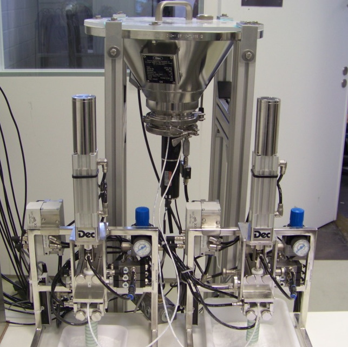
μPTS in a laboratory for testing purposes.
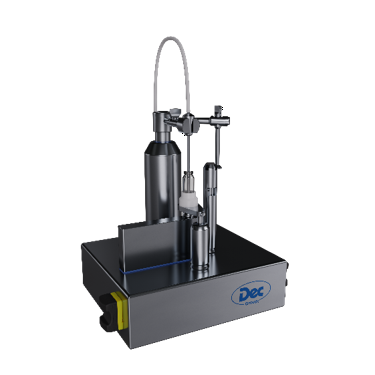
DecFill® LAB – laboratory unit featuring BoMa technology for rapid liquid microdosing.
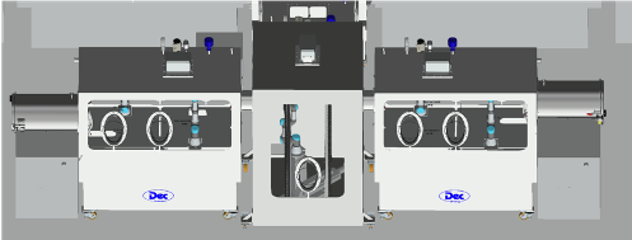
STORMS Stochastic Robotized Microsampling concept (Image courtesy of EPFL).
Related Articles